Hidden Gems in Dublin. Lesser-Known Spots Worth Visiting
Published: 10th August 2026
Hidden Gems in Dublin. Lesser-Known Spots Worth Visiting
Everyone knows the Guinness Storehouse. Everyone knows Trinity College, Dublin Castle and the Book of Kells. They are famous for a reason and they are absolutely worth your time. But Dublin is a city with far more layers than the standard tourist trail reveals, and if you have already done the big-ticket attractions or simply want to see a different side of the city, there is a whole other Dublin waiting to be discovered.
These are the spots that locals know and visitors often walk straight past. Quieter, richer and in many cases completely free. All of them within easy reach of Dublin Airport on Dublin Express.
📚 Marsh's Library. Ireland's Oldest Public Library
Location: St Patrick's Close, Dublin 8 (beside St Patrick's Cathedral) Admission: Small fee, concessions available Opening hours: Tuesday to Saturday, check marshlibrary.ie for current times
Founded in 1707 by Archbishop Narcissus Marsh, Marsh's Library is Ireland's first public library and one of the most atmospheric rooms in the entire country. Remarkably unchanged in over 300 years, its dark oak bookcases, leaded windows and centuries-old tomes create a sensory experience that no modern museum can replicate. The library holds over 25,000 rare books and manuscripts including early editions of Galileo, Newton, Jonathan Swift and Erasmus.
The most extraordinary feature is the original reading cages. Readers were once locked inside these wrought-iron enclosures while consulting the rarest volumes to prevent book theft. They remain in place today, exactly as they were three centuries ago.
Jonathan Swift, author of Gulliver's Travels and Dean of the nearby St Patrick's Cathedral, was a regular reader here. His presence still feels close. A visit typically takes around 30 to 45 minutes but book lovers consistently linger far longer.
It is tucked away just beside St Patrick's Cathedral in the Liberties, a five-minute walk from a cluster of other brilliant spots including Teeling Distillery and Iveagh Gardens. Most visitors to the cathedral walk straight past without ever knowing it exists.
How to get there: Dublin Express drops you at O'Connell Street and Westmoreland Street. From there, the Liberties is a 20-minute walk or a short Dublin Bus journey south. Fares from €9 at dublinexpress.ie.
🏚️ 14 Henrietta Street. Dublin's Most Powerful Museum
Location: 14 Henrietta Street, Dublin 1 Admission: Guided tour, booking essential at 14henriettastreet.ie Opening hours: Wednesday to Sunday, tours on the hour from 10am to 4pm
If you visit only one lesser-known attraction in Dublin, make it 14 Henrietta Street. It is one of the most genuinely moving museum experiences in Ireland and is visited by only a fraction of the people who queue for the more famous sites a short distance away.
The building began life in the 1740s as a grand Georgian townhouse for Dublin's wealthiest families, home to Lord Chancellors, Viscounts and Bishops. After the Act of Union in 1800 sent Dublin's elite to London, the house began a long decline. By 1877 it had been divided into 19 tenement flats. By 1911 over 100 people were living under one roof, entire families sharing a single room.
The guided tour takes you through over 300 years of life within the same walls, from the grand plasterwork ceilings of the Georgian drawing rooms to the cramped, graffiti-scarred tenement spaces of the early 20th century. The Reckitt's Blue paint once applied to the walls to try to combat disease is still visible. Personal objects and recordings of former residents bring the experience to life in a way that is genuinely powerful.
The museum won a Europa Nostra heritage award, one of Europe's most prestigious heritage recognitions. It is nominated for European Museum of the Year and it is consistently described by visitors as the best thing they did in Dublin. Pre-booking is essential as tours are small and fill up quickly.
How to get there: Henrietta Street is a 15-minute walk north of O'Connell Street, or a short Luas Red Line journey to Jervis and a five-minute walk from there. Dublin Express connects Dublin Airport to O'Connell Street in as little as 14 minutes from €9.
🌿 Iveagh Gardens. Dublin's Secret Garden
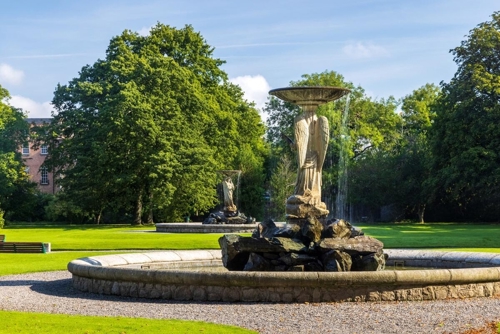
Location: Clonmel Street, off Harcourt Street, Dublin 2 Admission: Free Opening hours: Daily from 8am, check dublinbikes.ie for seasonal closing times
Dublin has St Stephen's Green, which everyone knows and loves. What almost nobody knows is that five minutes walk away, hidden behind the National Concert Hall on Harcourt Street, is a Victorian walled garden that is almost always quiet. The Iveagh Gardens are one of the best kept secrets in the entire city.
Laid out in the 1860s, the gardens feature a yew maze, a rosarium, a rustic grotto, cascading waterfalls, a sunken lawn and long stretches of perfectly kept grass. On a sunny day in summer when St Stephen's Green is packed with tourists and tour groups, the Iveagh Gardens are typically occupied by a handful of people eating lunch or reading on the grass. The birdsong is audible. It feels entirely removed from the busy city surrounding it.
There is no charge to enter and no crowds to navigate. It is the perfect place to sit for an hour between bigger attractions, to clear your head or to simply enjoy being in Dublin without an agenda.
How to get there: A short walk from Harcourt Street Luas stop or a 15-minute walk from Dublin Express stops on O'Connell Street and Westmoreland Street.
🏛️ The Little Museum of Dublin. A Georgian Gem
Location: 15 St Stephen's Green, Dublin 2 Admission: Small fee, booking recommended at littlemuseum.ie Opening hours: Daily, check website for current times
The Little Museum of Dublin sits in a beautiful Georgian townhouse on St Stephen's Green and tells the story of Dublin's 20th century through objects donated by ordinary Dubliners. The collection includes letters, photographs, furniture, posters, toys, political ephemera and everyday items that together build an intimate and surprisingly funny portrait of life in Dublin across the last hundred years.
The guided tours are what make it special. The guides are knowledgeable, entertaining and genuinely passionate about the stories they tell. There is a warmth to the place that larger institutions rarely manage. It takes around an hour and consistently receives some of the best visitor reviews of any attraction in the city.
There is also a permanent U2 exhibition celebrating the band's connections to Dublin which is a particular draw for international visitors.
How to get there: The museum is on St Stephen's Green, a ten-minute walk from Dublin Express stops at Westmoreland Street and O'Connell Street.
🌳 The National Botanic Gardens. Free and Spectacular
Location: Glasnevin, Dublin 9 Admission: Free Opening hours: Daily, check botanicgardens.ie for seasonal times
The National Botanic Gardens in Glasnevin are completely free to enter and are one of the most beautiful spaces in Dublin. Covering over 48 acres beside the River Tolka, the gardens feature Victorian glasshouses, a walled kitchen garden, an arboretum, a rose garden and diverse plant collections spanning thousands of species from across the world.
The Victorian curvilinear glasshouses, designed by Richard Turner who also designed the glasshouses at Kew Gardens in London, are the architectural highlight. They feel extraordinary inside, warm and humid and full of exotic plants from around the world. Entry to the glasshouses is included in the free admission.
The gardens are far less crowded than Phoenix Park and offer a genuinely peaceful few hours for visitors of any interest level. They are also directly adjacent to Glasnevin Cemetery, one of Ireland's most historically significant sites and home to the graves of Daniel O'Connell, Michael Collins and countless other figures from Irish history.
How to get there: Dublin Bus route 83 runs from the city centre to Glasnevin. Dublin Express drops you in the city centre from €9 at dublinexpress.ie.
🧱 Stoneybatter. Dublin's Most Interesting Neighbourhood
Location: Northwest of the city centre, Dublin 7 Admission: Free to wander Best time to visit: Any time, though weekend afternoons are particularly good
If you want to see a side of Dublin that has nothing to do with tourism, spend an afternoon in Stoneybatter. This northwest inner-city neighbourhood is what happens when a community keeps its character through years of change. It has the independent coffee shops, the vinyl record shops, the good pubs and the neighbourhood restaurants of a gentrified area, but it still feels genuinely like a place where people actually live.
Walk Arbour Hill down towards the Smithfield edges. Stop at a corner cafe. Browse the shelves of a second-hand bookshop. Eat lunch somewhere that does not have a tourist menu. Have a pint in a pub where the locals will happily tell you their opinion on everything. The rhythm of the place is distinctly different from the city centre and gives you a Dublin that most visitors never find.
Nearby Arbour Hill Cemetery contains the graves of the executed leaders of the 1916 Rising, including Patrick Pearse, James Connolly and Thomas Clarke. It is a quiet, dignified place that sees a fraction of the visitors that Kilmainham Gaol does, despite being directly connected to the same history.
How to get there: A 20-minute walk northwest from O'Connell Street or a short bus journey on several Dublin Bus routes from the city centre.
💧 Blessington Street Basin. A Locals Only Secret
Location: Blessington Street, Phibsborough, Dublin 7 Admission: Free Opening hours: Open during daylight hours
In Phibsborough, a short walk north of the city centre, there is a small Victorian reservoir surrounded by a walled garden that almost no visitor to Dublin has ever heard of. Blessington Street Basin was built in 1810 as Dublin's first clean water reservoir and is now a beautiful, calm public park with a small lake at its centre, ducks, willow trees and benches arranged around the water's edge.
It is a genuinely lovely spot. The walls keep out the noise of the surrounding streets. The water is reflective and still. It is the kind of place Dubliners bring their lunch to or sit with a coffee from one of the nearby cafes on a quiet afternoon. It is almost never crowded, has no admission charge and takes about 20 minutes to walk around at a leisurely pace.
Just around the corner on the Grangegorman campus, the newly developed urban quarter surrounding the Technological University Dublin is worth exploring too. The conversion of the old Grangegorman grounds into a public-facing campus with cafes, events spaces and open green areas is one of the most interesting urban developments in recent Dublin history.
How to get there: A 20-minute walk from O'Connell Street or a short bus journey on several northside routes. Dublin Express connects Dublin Airport to the city centre from €9.
🎵 The National Print Museum. Surprisingly Brilliant
Location: Garrison Chapel, Beggars Bush, Haddington Road, Dublin 4 Admission: Small fee, see nationalprintmuseum.ie for current pricing Opening hours: Tuesday to Saturday
Tucked inside the former garrison chapel at Beggars Bush in Dublin 4, the National Print Museum tells the story of printing in Ireland from Gutenberg to the digital age. It is one of those places that sounds like it might be dry but turns out to be genuinely fascinating.
The museum holds working examples of historic printing presses and the guided tours demonstrate the machines in action. The connection between printing technology, literacy, political pamphlets, revolutionary documents and the formation of the Irish state is told with real passion. The 1916 proclamation was printed on one of the types of machine on display here. The building itself, a beautiful Victorian chapel, adds enormously to the atmosphere.
It draws only a fraction of the visitors of larger Dublin museums but consistently receives outstanding reviews from those who do find it.
How to get there: A short walk from Baggot Street Lower. Dublin Express drops you at Westmoreland Street and Harcourt Street, from where it is around a 20-minute walk or a short taxi ride.
🚌 Getting to Dublin From the Airport
All of the spots in this guide are within easy reach of Dublin city centre, which is itself just 14 minutes from Dublin Airport on Dublin Express Route 782. Services run every 7.5 minutes at peak times, 365 days a year, with coaches calling at O'Connell Street, Westmoreland Street, Harcourt Street and more.
Use the live Coach Tracker at dublinexpress.ie to see exactly when your next service is due before you leave for your stop.
Single fares from €9. Book at dublinexpress.ie.
The Real Dublin is Waiting
The Guinness Storehouse and Trinity College are brilliant. But the Dublin that locals love is quieter, cheaper and in many cases completely free. Marsh's Library. 14 Henrietta Street. Iveagh Gardens. Blessington Street Basin. These are the places that stay with you long after the famous ones have blurred together in your memory.
Dublin Express gets you from the airport to the city in as little as 14 minutes from €9. The rest is up to you.
Book your Dublin Express transfer at dublinexpress.ie.
All attraction details are correct at time of publication (May 2026). Always check individual venue websites for current opening hours, admission prices and booking requirements before you visit. Dublin Express timetables and fares are available at dublinexpress.ie.
